
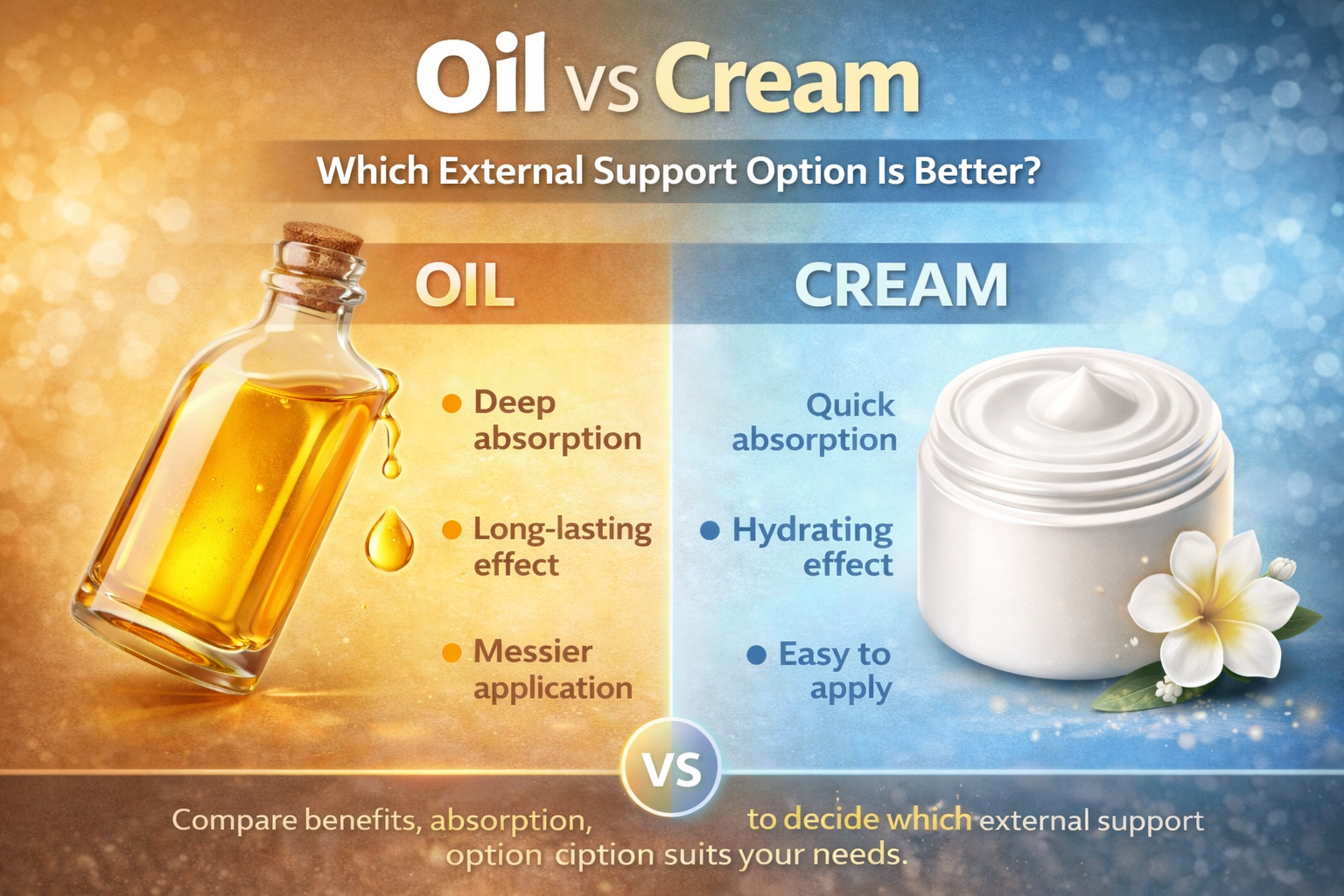
Oil vs Cream: Which External Support Option Is Better
External support products for men come in various formulations, including oils and creams. You can apply these topical products directly to the skin before intimate activity. Understanding the differences between oils and creams helps choose a suitable option. Both formats contain active ingredients, though delivery mechanisms differ.
Oil-Based Products
Composition and Ingredients
They use natural or synthetic oils as primary carriers. Natural options offer moisturizing benefits with primary functions. Synthetic oils provide more stability and consistent properties. The oil composition affects texture, absorption, and skin feel. Understanding ingredient profiles helps identify quality products.
Application Characteristics
Oils spread easily across skin with minimal friction. The slippery texture facilitates smooth massage application. Oils penetrate skin slowly. The product remains on the skin surface longer than creams. This surface presence provides ongoing lubrication effects. However, oils can feel greasy or heavy to some users. The slow absorption means waiting time before contact. Some oils stain fabrics, requiring care with clothing and linens.
Effectiveness
They typically provide effects lasting 30 to 90 minutes. The slow absorption creates a gradual onset of any numbing effects. Oils containing herbal extracts work through different mechanisms than pharmaceutical numbing. However, scientific evidence for most herbal oils remains limited. The moisturizing properties benefit skin health alongside the primary purposes. Duration varies widely based on specific formulation and ingredients.
Advantages of Oils
Natural oils appeal to consumers who prefer organic, traditional approaches. Natural options have fewer synthetic chemicals than some creams. The products work well for intimate massage applications. Some medicines have historically used oil-based preparations. The format suits couples wanting shared massage experiences.
Cream-Based Products
Composition and Ingredients
They use water and oil emulsions as primary bases. Active ingredients include pharmaceutical numbing agents or herbal extracts. The cream base allows better absorption than pure oils. Preservatives prevent bacterial growth in water-containing formulations. Thickeners create the desired consistency and skin feel.
Application Characteristics
They have a thicker consistency than oils. The texture allows precise controlled application to specific areas. Creams absorb faster than oils, reaching active depth quicker. The faster absorption reduces waiting time before effectiveness. Creams feel less greasy than oils to most users. The consistency makes massage application slightly different than oils.
Effectiveness
They typically provide effects within 15 to 30 minutes. The faster onset makes timing easier than slower oils. Herbal creams have limited scientific support. The cream format allows higher active ingredient concentrations. Effectiveness-evidence is strongest for pharmaceutical numbing creams.
Advantages of Creams
Pharmaceutical creams have extensive research supporting their effectiveness. The faster absorption provides more convenient timing. Less messiness and staining compared to oils. Water-based creams clean easily from skin and fabrics. The format feels more clinical and pharmaceutical to many users. Precise application targets specific areas without excess.
Conclusion
Both oils and creams offer viable external support options with distinct characteristics. Oils offer natural moisturizing approaches with massage benefits. Creams deliver pharmaceutical effectiveness with convenient, faster absorption. Oils are suitable for those who prefer a natural, sensual approach. Pharmaceutical creams benefit those wanting proven, reliable effects. Cost varies more by specific product than by format type.

About author


Add comment
You must be logged in to post a comment.